
NFP, Openness to Life, and the Duty to Have Children


Have you ever wondered...
Is it sinful to want only one or two children—or to decide not to have any more?
What actually constitutes a sufficiently serious reason to postpone another pregnancy?
Can physical, psychological, or financial difficulties justify postponing pregnancy?
Can a couple legitimately avoid pregnancy indefinitely, even for the rest of their marriage?
Could it ever be wrong to seek another pregnancy?
What does it really mean to be open to life?
Does trusting God mean leaving the number of children you have entirely in His hands?
How can you know whether you're following God's will in deciding when to have children?
What if one spouse wants another child and the other does not?
Can one spouse insist on practicing NFP against the wishes of the other?
What obligations do spouses have toward one another concerning marital intercourse?
What if practicing periodic abstinence creates serious difficulties in living chastely?
These are just some of the important questions surrounding natural family planning that deserve serious consideration in light of the Church's moral tradition.
Complete a brief survey to share your interests, questions, availability, and budget.
When Do Couples Have Serious Reasons to Postpone Having Children?
A proposed online course combining Catholic moral theology, practical guidance, live discussion, and individual coaching.
Many Catholics encounter conflicting explanations of the Church's teaching on natural family planning. Even when they understand some of the general principles, they may struggle to determine how those principles apply to their particular circumstances.
And the questions involved go well beyond simply determining whether practicing NFP is permissible.
Couples need to understand their positive obligations concerning the procreation and education of children, the circumstances that can justify postponing pregnancy, and how to exercise prudence in deciding what they ought to do.
I'm considering offering a new course through the Aquinas Institute for Christian Perfection that would address these questions systematically, drawing especially on the Church's moral theological tradition and relevant magisterial teachings.
The goal would not simply be to provide answers to particular questions, but to help participants understand the underlying moral principles and learn how to apply them prudently in their own lives.
Throughout the classes, we would examine concrete questions, difficult cases, and practical applications. Individual coaching would provide an additional opportunity to discuss your own circumstances and questions.


Understanding the Principles—and Applying Them to Real Life
1. Marriage and the Obligation to Have Children
The purposes of marriage, the responsibilities of spouses concerning procreation and the education of children, and the nature and limits of the positive obligation to have children.
2. Contraception, Periodic Continence, and Openness to Life
Why contraception and periodic continence differ morally, what openness to life actually requires, and how these teachings relate to the broader obligations of married life.
3. Serious Reasons and Practical Prudence
What kinds of circumstances can justify postponing pregnancy, how spouses should evaluate their particular situation, and how to reconcile responsible family planning with trust in Divine Providence.
We would also consider related practical questions concerning agreement between spouses, conjugal obligations, and the difficulties that can arise when practicing periodic continence.
Rather than treating these questions as isolated problems, the course would aim to show how they fit together within a coherent understanding of Catholic moral theology.


What Would the Course Examine?
We're considering offering the first class beginning in late January 2027.
The course would include:
Live online classes, combining systematic theological instruction with practical applications and substantial opportunities for questions and discussion.
Individual coaching, providing an opportunity to discuss your questions and how the moral principles studied apply to your particular circumstances.
A small class, allowing for meaningful participation and interaction.
The precise number of meetings, coaching arrangements, schedule, and tuition have not yet been finalized.
This is not instruction in fertility-awareness methods. The focus is on understanding the Church's moral teaching and learning how to make prudent decisions about having or postponing children.


Proposed Course Format
"The Aquinas Institute for Christian Perfection provides genuine formation in the Catholic intellectual heritage based on the sound spiritual and moral teaching of St. Thomas Aquinas and the magisterium of the Catholic Church. It provides a wonderful service and opportunity for those interested in understanding the Catholic Christian tradition more profoundly. Matthew DuBroy is a learned and sound guide in Catholic theology."
-Fr. Thomas Joseph White, O.P.
Rector Magnificus, Pontifical University of St. Thomas Aquinas (Angelicum), Rome


About the Instructor
Dr. Matthew DuBroy is a Catholic theologian and the founder and director of the Aquinas Institute for Christian Perfection.
He holds a Doctorate in Sacred Theology (S.T.D.) from the Dominican House of Studies in Washington, D.C., where his dissertation was directed by Fr. Thomas Joseph White, O.P., and a Licentiate in Sacred Theology (S.T.L.) from the Pontifical John Paul II Institute for Studies in Marriage and Family in Washington, D.C.
He has taught for more than a decade, including graduate-level courses at Holy Apostles College and Seminary, and his scholarly work has appeared in Nova et Vetera. He and his wife have five children.
I'm currently gathering information from prospective participants to determine the most suitable format, schedule, and tuition for the course.
If you're interested, please complete the brief survey. You'll be able to share the questions you'd most like addressed, your availability, and what you could realistically budget toward gaining a deeper understanding of these matters.
By joining the Priority Waitlist, you'll receive the first opportunity to enroll when registration opens.
Join the Priority Waitlist


The Aquinas Institute for Christian Perfection aims to give ordinary laity access to the tradition in a way that can fit into the duties of their state of life.
Most laity can’t dedicate their full time to studying the riches of the tradition on their own but they can dedicate some time to those pursuits if they have a trained guide giving them what they need to grow in Christian perfection and help their family do the same.
The Aquinas Institute for Christian Perfection is NOT a place for hot takes or sensationalist social media. We are seeking to be what we would call a "reasonable Traditionalist," one who is working to be careful and measured in one's thinking and at the same time have a deep love for the Catholic tradition in both liturgy and theology.
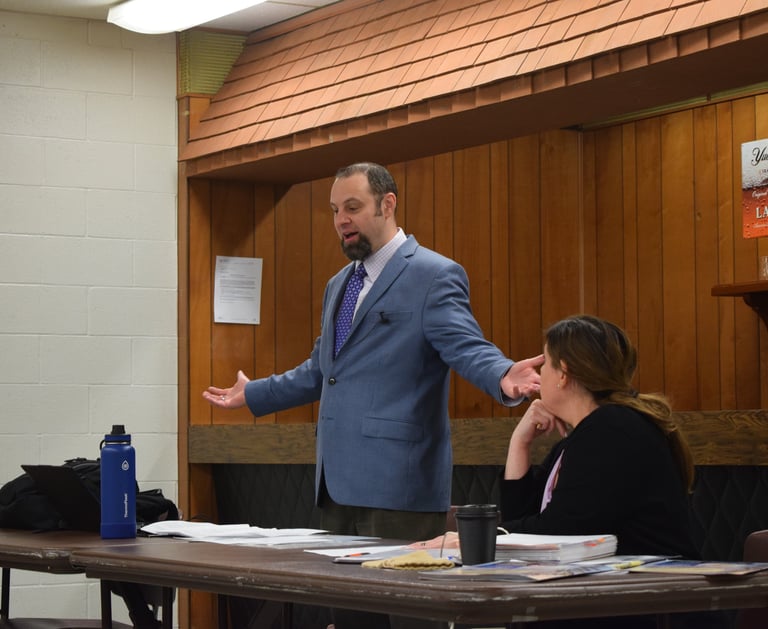
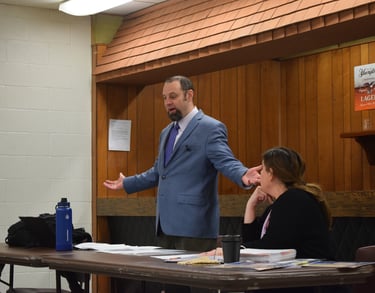
We are a community dedicated to education in the Catholic tradition, helping individuals and families grow in Christian perfection through guided learning and resources.
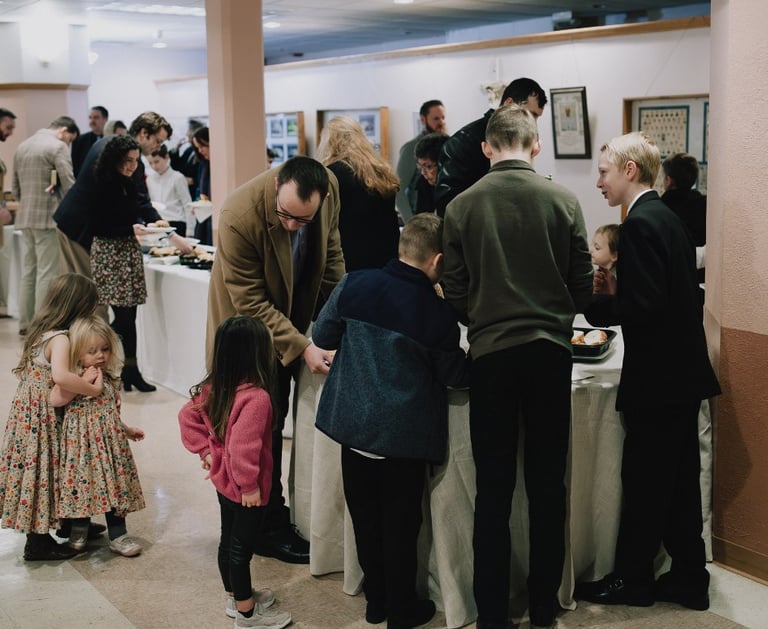

Dr. Matthew DuBroy, our program offers reliable guidance for those seeking to deepen their understanding of the rich Catholic tradition and support their children's spiritual growth.
Led by
Community